
We Buy Houses in Chicago, Illinois
From the Bungalow Belt to the two-flats and greystones across the city, we buy Chicago houses as-is for cash — any neighborhood, any condition. No repairs, no fees, no obligation.
- As-Is — Any Condition
- No Fees or Commissions
- Close On Your Timeline
The local buyer for Chicago homes
You can sell a Chicago house or two-flat as-is for cash — no repairs, no cleanout, no showings, no commissions — and pick the closing date yourself. Chicago is the oldest housing market we buy in by a wide margin: 39% of the city's 1.27 million housing units were built before 1940, and the median Chicago home dates to 1952. Age, not neglect, is what puts most of these houses in front of a cash buyer. (Build-era and housing figures: U.S. Census Bureau, American Community Survey 2019–2023 five-year estimates, tables B25034, B25035 and B25003.)
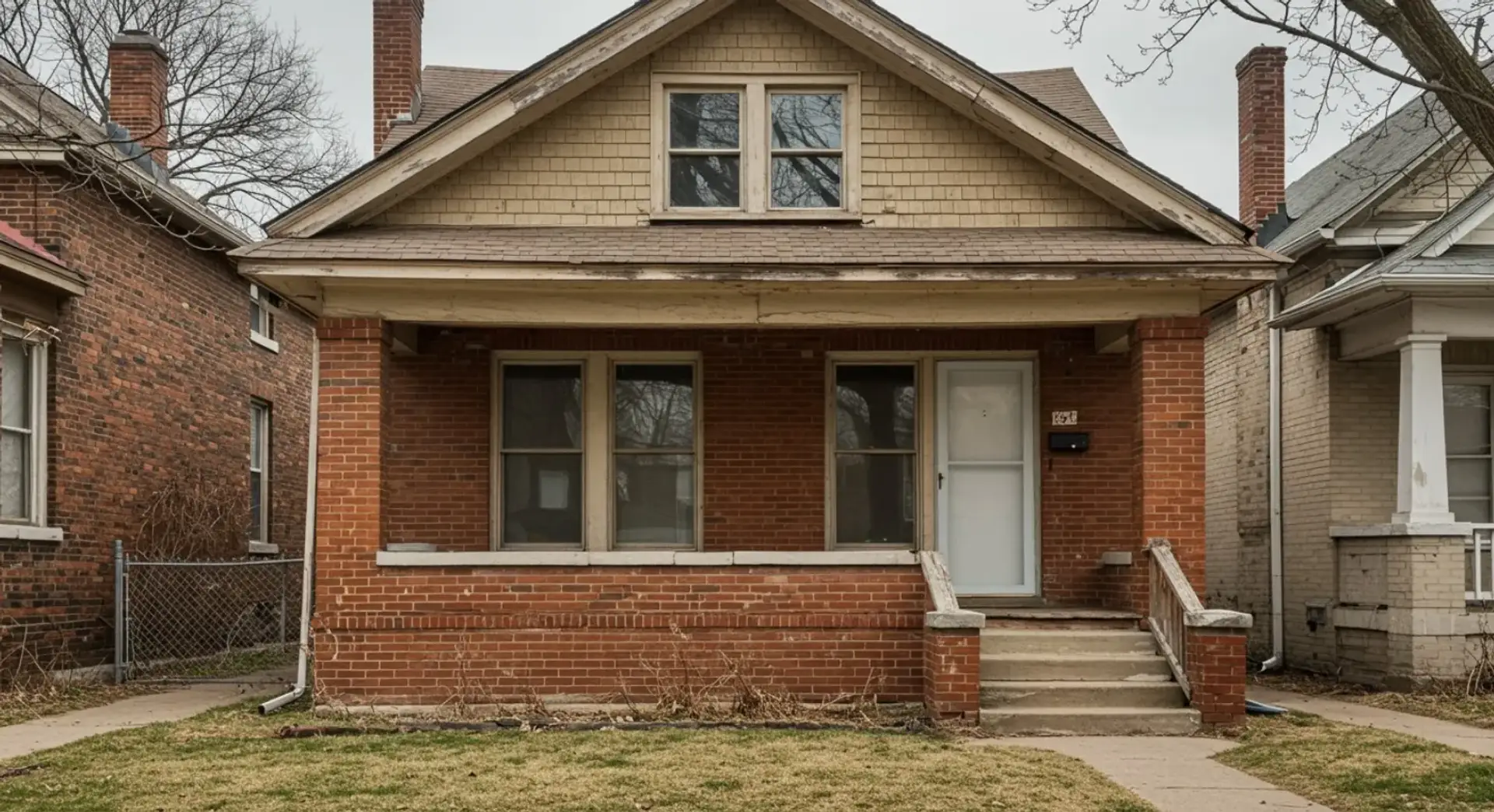
The defining Chicago house is the brick bungalow. Roughly 100,000 bungalows went up across Cook County between 1910 and 1940, about 80% of them inside the city limits, and the 80,000-odd that still stand make up close to a third of Chicago's single-family housing. The form barely varies: one and a half storeys, full basement, low-pitched roof with wide eaves, a raised front porch, and Arts and Crafts detailing — running in a belt through Portage Park, Jefferson Park, Garfield Ridge, Chatham and dozens of neighbourhoods beside them. (Bungalow counts: Chicago Architecture Center and the Chicago Bungalow Association; Chicago build-era and tenure shares: U.S. Census Bureau, American Community Survey 2019–2023, tables B25034 and B25003.)
Around the bungalows sit the other Chicago types we buy constantly: two-, three- and four-flats on nearly every block, South and West Side greystones with their Bedford limestone fronts, frame cottages that predate the brick ordinances, Georgians, and postwar Cape Cods. Chicago is also a landlord's market by construction — only about 522,000 of 1.15 million occupied units are owner-occupied — so small multi-unit buildings change hands here far more often than in the suburbs.
A century-old brick house fails in a recognisable order, and Chicago's version has its own signature items. Knob-and-tube remnants and 60-amp service. Galvanized supply lines and clay sewer laterals. Cast-iron drain stacks. Gravity boilers converted decades ago. Tuckpointing and lintels. And the porches: after the 2003 Lincoln Park porch collapse the city rewrote its porch code and enforcement, and a rear porch that predates that work is one of the most common reasons a Chicago building fails an inspection.
We buy all of it, in every community area, exactly as it stands — bungalow, greystone, frame cottage or a tenant-occupied three-flat with belongings still inside.
Why Chicago homeowners sell as-is
Every situation is different. Whatever you’re facing, we can help you sell without repairs, fees, or the wait of a traditional listing.
- Pre-1940 bungalows, greystones and frame cottages with original systems
- Knob-and-tube remnants, 60-amp service and fuse panels that insurers refuse
- Galvanized supply lines, clay sewer laterals and cast-iron drain stacks
- Rear porches that no longer meet the post-2003 city porch code
- Masonry work — tuckpointing, lintels, parapets and bowed common walls
- Tenant-occupied two-, three- and four-flats you are done managing
- Cook County tax bills, or taxes already sold at the annual tax sale
- Inherited family homes still full of belongings, often held for generations
What a Chicago closing actually requires
Chicago adds steps to a sale that suburban closings do not have, and they are the ones that slip a closing date. The city requires its own transfer stamp on top of the county and state stamps, and it will not issue that stamp until the water account is certified with a final reading and any outstanding balance settled. Open building-code violations and unpaid city debt attach to the same process. For an owner of an older building that has been rented or standing empty, this is where a sale stalls — the paperwork surfaces obligations nobody had counted. Separately, Cook County bills property taxes in two instalments and holds an annual tax sale on unpaid bills, after which a redemption period runs. We deal with the stamp, the water certification and the tax payoff on every Chicago purchase, and all of it settles out of the proceeds at closing rather than out of your pocket beforehand.
Situations we buy Chicago homes in
Cook County foreclosures run through the courts — selling before the sale date helps protect your equity.
Inherited a family bungalow or two-flat? We buy as-is, belongings and all.
Behind on Cook County taxes or facing the annual tax sale? The payoff is handled at closing.
A clean, neutral sale — common with jointly-owned Chicago homes and two-flats.
Done managing a Chicago two- or three-flat? We buy occupied buildings, tenants in place.
Vacant Chicago homes attract code violations and city attention. We buy them as-is.
Older Chicago housing stock often needs roofs, porches, or updated systems — we buy anyway.
Leaving Chicago? Pick your closing date and handle the whole sale remotely.
Don’t see your situation?
These are just the most common ones. We buy Chicago houses for any reason and in any condition — including fire, water, foundation, and mold damage, houses still full of belongings, and property types beyond single-family houses.
Selling a house in Chicago — FAQs
Do you buy in every Chicago neighborhood?
Yes. We buy across all of Chicago's community areas — the Northwest and Southwest Sides, the South and West Sides, and everywhere between. Wherever your home is in the city, we are interested, and the neighbourhood affects the number rather than whether we make one.
I inherited a Chicago house that is still full of belongings.
Leave them. We buy inherited Chicago homes and two-flats with the contents inside — take what matters to you and we clear the rest. We work to the executor's or the attorney's timing rather than a lender's calendar, and we can handle the whole sale remotely if you are out of state.
Do you buy tenant-occupied 2–4 unit buildings in Chicago?
Regularly. Chicago is majority-renter — only about 522,000 of 1.15 million occupied units are owner-occupied — and small multi-unit buildings are a large part of what we buy. You do not need to evict anyone, wait out a lease, or empty the building. We take it with the tenants in place and honour the existing leases.
What about Chicago's transfer stamp and water certification?
Chicago requires its own transfer stamp on top of the county and state stamps, and will not issue it until the water account is certified with a final reading and any balance settled. Open code violations and city debt run through the same process. We handle all of it on every Chicago purchase through a local title company, so it does not derail your closing date.
Do you buy Chicago bungalows, two-flats and greystones?
Yes — those are the houses we buy most. Around 80,000 bungalows still stand in Chicago, close to a third of the city's single-family stock, and after a century the brick is almost always sound while the wiring, plumbing, roof and heating are not. Greystones, frame cottages, Georgians and two- to four-flats are all the same answer: we buy them as-is, in any condition, in any neighbourhood.
My Chicago rear porch is not up to code. Does that kill the sale?
Not with us. Chicago rewrote its porch code and enforcement after the 2003 Lincoln Park collapse, and a rear porch built before that work is one of the most common findings on an older Chicago building. Replacing one properly is a permitted job running into real money, which is exactly the kind of cost a financed buyer will demand you cover first. We buy the building with the porch as it is.
I am behind on Cook County property taxes. Can I still sell?
Yes, and it is one of the more common reasons owners here call us. Cook County bills in two instalments and holds an annual tax sale on unpaid bills, with a redemption period afterwards. Delinquent taxes are paid off at closing directly from the sale proceeds along with any mortgage payoff — you do not need to clear them first or bring money to the table. The closer a redemption deadline is, the fewer buyers can close in time, which is exactly when a cash sale is worth asking about.
Would I get more listing my Chicago house with an agent?
If the house has been rehabbed, it shows well, and you can wait out 60 to 90 days of showings plus a buyer's inspection and appraisal, then usually yes — Chicago has deep retail demand in most of the city and we would rather tell you that than take an hour of your time. Cash earns its place on a bungalow with every system original, a building with open violations or city debt, a tenant-occupied three-flat, a tax redemption deadline, or an estate that needs settling rather than renovating.
How we arrive at an offer on your Chicago home
You should be skeptical of anyone offering to buy a house they have not seen. Most owners get the postcards — no company name on them, a mobile number, a promise of top dollar. So here is how ours works: we use the same formula on every house, and when we present the offer we show you the math behind the number and the recent Chicago sales we compared yours to. Nothing is invented on the spot, and nothing is held back.
A buyer who will not show you where their number came from is telling you something. You are welcome to check ours against what you already know about your own street — and you are never under any obligation to accept it.
And the honest part: if your Chicago home has been kept up and you can wait out 60 to 90 days of showings, an inspection and a buyer's appraisal, listing it with a good local agent will usually net you more than we will — even after commission. We would rather tell you that than take an hour of your time. A cash sale earns its place when the house needs work you do not want to fund, when something about it puts lenders off, or when a closing date that will not move is worth more to you than the last few percent.
-
Buying since 2021
A local Chicagoland company, not a national brand or a call center.
-
100+ properties closed
$5,334,500 paid out for houses across the six counties we serve.
-
Our own funds, our own name
We are the buyer on the closing documents, through a local title company.
Get your free cash offer on your Chicago home
Tell us about the property and your situation. We’ll reach out with a fair, as-is cash offer — no pressure, no cost, and no obligation.