
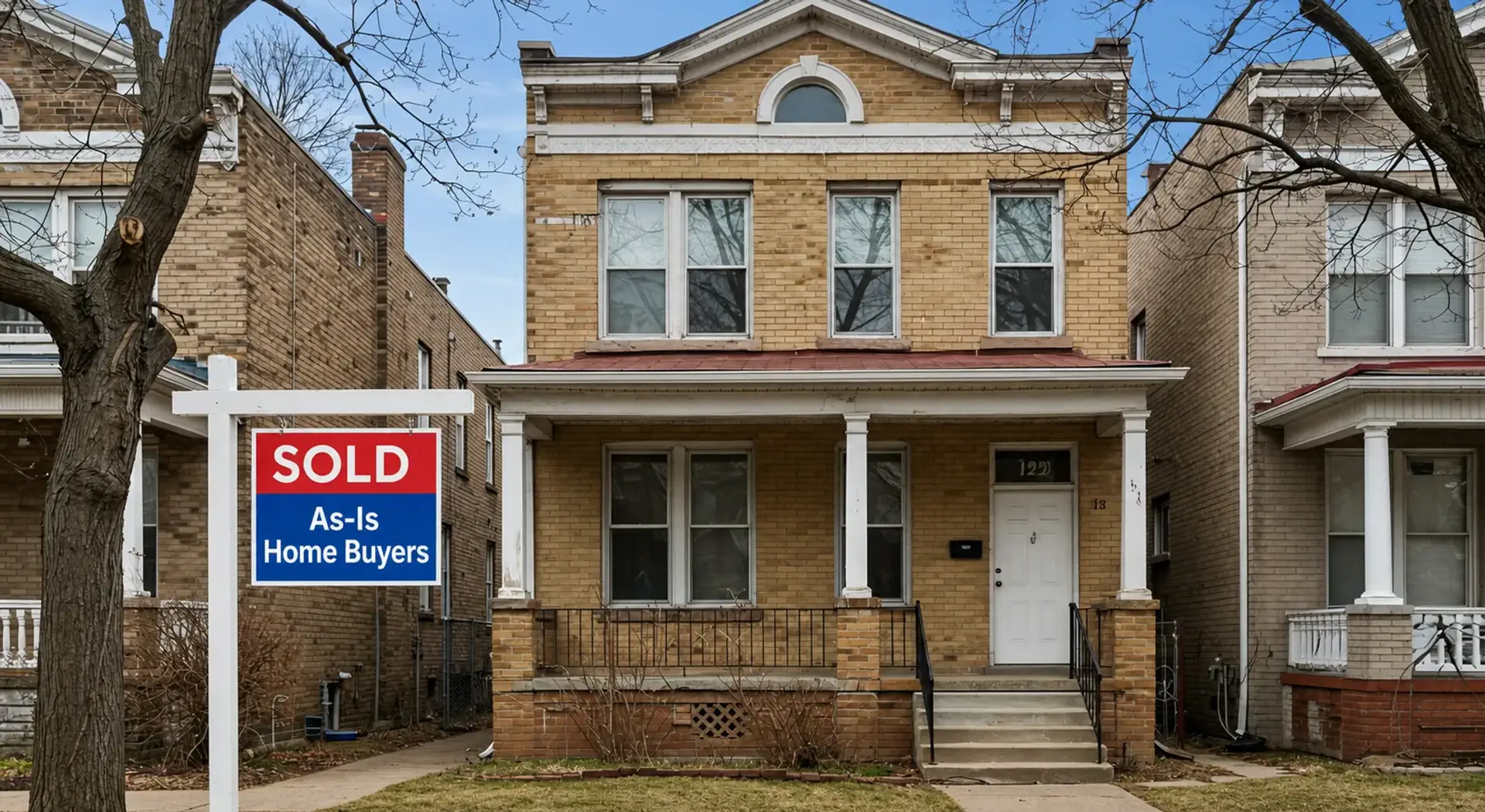
We Buy Houses in Naperville, Illinois
Naperville’s huge 1980s and ’90s housing wave is all aging out together. We buy those homes as-is for cash.
- As-Is — Any Condition
- No Fees or Commissions
- Close On Your Timeline
The local buyer for Naperville homes
You can sell a Naperville house as-is for cash, skip the repairs, and choose your own closing date. Naperville is unusual among the towns we buy in for how narrow its housing vintage is: the 1980s and 1990s alone account for 52% of all 56,575 homes in the city, and the median Naperville home was built in 1989. An entire generation is reaching the end of its service life at the same moment. (Build-era and housing figures: U.S. Census Bureau, American Community Survey 2019–2023 five-year estimates, tables B25034, B25035 and B25003.)
Naperville is much older than that number suggests. Joseph Naper founded the settlement on the DuPage River in 1831, and Naper Settlement — established in 1969 and built from historic structures moved here from around the area — preserves buildings spanning 1831 to the early twentieth century. But only 2.7% of the city's housing predates 1940. What Naperville mostly is, physically, was built in the lifetime of people still living in it. (Build-era and housing figures: U.S. Census Bureau, American Community Survey 2019–2023 five-year estimates, tables B25034, B25035 and B25003.)
One builder shaped much of that. Harold Moser opened his first subdivision in 1956, followed East Highlands with West Highlands on the same model, then bought land on the west bank of the DuPage River and created River Haven Estates in 1959. By 1995 Moser had subdivided about 8,000 building lots and built roughly 3,500 Naperville homes. Naperville's population grew 84% between 1950 and 1960, and kept going — the Riverwalk that now defines downtown was built in 1981. (Population figures: U.S. Census Bureau decennial censuses.)
The practical consequence of a city built in two decades is that its houses fail together. A Naperville subdivision home from the late 1980s or 1990s is typically on its second roof, its second furnace, its original window seals and its original water heater — and the bills arrive within a few years of each other. Homes from the late 1970s into the mid-1990s frequently carry polybutylene supply piping, which can fail inside a wall with no warning and which insurers and lenders both treat as a live risk. Masonite and cedar siding from the same era is now at end of life.
We buy across all of it — the 1990s colonials, the townhomes and condos, the 1950s Moser ranches near downtown, and the unincorporated pockets on private well and septic where a failed field ends a financed sale outright.
Why Naperville homeowners sell as-is
Every situation is different. Whatever you’re facing, we can help you sell without repairs, fees, or the wait of a traditional listing.
- 1980s–90s homes where roof, furnace, A/C, water heater and windows all come due at once
- Polybutylene supply piping, common from the late 1970s into the mid-1990s
- Masonite and cedar siding at end of life, plus failed thermal-pane window seals
- 1950s–60s Moser-era ranches on large mature lots near downtown
- Unincorporated Naperville Township pockets on aging private well and septic systems
- Townhomes and condos facing special assessments from an aging association
- Inherited homes where a full modernization before listing is not realistic
Two Napervilles: land value downtown, condition everywhere else
Naperville is really two selling propositions and it is worth knowing which one you own. In East Highlands and the blocks near downtown, Harold Moser's 1950s ranches sit on large mature lots that draw custom rebuilders, and there the land itself can support a fair cash offer even when the house needs everything. Across the rest of the city — the 52% of Naperville built in the 1980s and 1990s — there is very little teardown activity, because the houses are too new and the lots too standard to justify it. There the conversation is entirely about condition: what has been replaced, what has not, and how many major systems are due in the same year. An offer that does not distinguish between the two is guessing at one of them. (Census, 2019–2023.)
Situations we buy Naperville homes in
Behind on payments or facing a sale date? We can often close before it.
Sell an inherited or probate home as-is — no clean-out, no repairs.
Owe back taxes? They're typically paid off at closing from the proceeds.
A fast, neutral sale with a firm closing date so both parties can move on.
Sell your rental occupied or vacant — no evictions, no turnover, no repairs.
Stop paying to hold an empty house. We buy vacant homes in any condition.
Major repairs, fire or water damage, or just dated — we buy it as-is.
Moving out of the area? Close on a firm date that matches your timeline.
Don’t see your situation?
These are just the most common ones. We buy Naperville houses for any reason and in any condition — including fire, water, foundation, and mold damage, houses still full of belongings, and property types beyond single-family houses.
Selling a house in Naperville — FAQs
My Naperville house may have polybutylene plumbing. Is that a dealbreaker?
Not for us. Polybutylene supply piping is common in homes built from the late 1970s into the mid-1990s, which covers a very large share of Naperville, and it can fail inside a wall without warning. Insurers and lenders treat it as a live risk, which is why it so often ends a financed sale. Because we pay cash, it does not stop ours.
Do you buy Naperville townhomes and condos?
Yes. Naperville has a large attached-housing stock built alongside the subdivision waves, and we buy units as well as single-family homes. A pending special assessment or a thin association reserve is a common reason an attached-home sale falls apart at retail; tell us about it and we factor it into the number rather than walking away.
What if my Naperville property is on a private well and septic system?
No obstacle. Private wells and septic fields are common in the unincorporated Naperville Township pockets, and a failed field is one of the most reliable ways for a financed sale to collapse — the buyer's lender orders an inspection, the system fails, and replacing it on a constrained lot is slow or impossible. We buy the property with the system as it is.
Do you buy 1980s and 1990s Naperville subdivision homes?
Yes — they are the majority of the city and the bulk of what we buy here. The 1980s and 1990s together account for 52% of Naperville's housing, so roofs, furnaces, air conditioning, water heaters and window seals all aging out together is the standard situation rather than an unusual one. We price that work in instead of asking you to fund it before selling. (Census, 2019–2023.)
Do you buy older Naperville ranches near downtown or in East Highlands?
Yes, and they are among the properties where we can be most competitive. Harold Moser's 1950s and '60s ranches on large mature lots near downtown draw genuine rebuild interest, so the land can carry a fair offer even when the house needs a full renovation. Only 2.7% of Naperville predates 1940, so these mid-century homes are effectively the city's older stock. (Census, 2019–2023.)
Would listing my Naperville house net me more than a cash offer?
Very possibly, and we will say so plainly. Naperville has strong, deep retail demand — if your home has been updated, it shows well and you can wait out 60 to 90 days of showings, an inspection and an appraisal, a listing will usually net more even after commission. Cash earns its place when four or five major systems are due at once, when there is polybutylene or a failing septic field, when the house is inherited and you are managing it from a distance, or when a firm closing date matters more than the last few percent.
How we arrive at an offer on your Naperville home
You should be skeptical of anyone offering to buy a house they have not seen. Most owners get the postcards — no company name on them, a mobile number, a promise of top dollar. So here is how ours works: we use the same formula on every house, and when we present the offer we show you the math behind the number and the recent Naperville sales we compared yours to. Nothing is invented on the spot, and nothing is held back.
A buyer who will not show you where their number came from is telling you something. You are welcome to check ours against what you already know about your own street — and you are never under any obligation to accept it.
And the honest part: if your Naperville home has been kept up and you can wait out 60 to 90 days of showings, an inspection and a buyer's appraisal, listing it with a good local agent will usually net you more than we will — even after commission. We would rather tell you that than take an hour of your time. A cash sale earns its place when the house needs work you do not want to fund, when something about it puts lenders off, or when a closing date that will not move is worth more to you than the last few percent.
-
Buying since 2021
A local Chicagoland company, not a national brand or a call center.
-
100+ properties closed
$5,334,500 paid out for houses across the six counties we serve.
-
Our own funds, our own name
We are the buyer on the closing documents, through a local title company.
Get your free cash offer on your Naperville home
Tell us about the property and your situation. We’ll reach out with a fair, as-is cash offer — no pressure, no cost, and no obligation.