
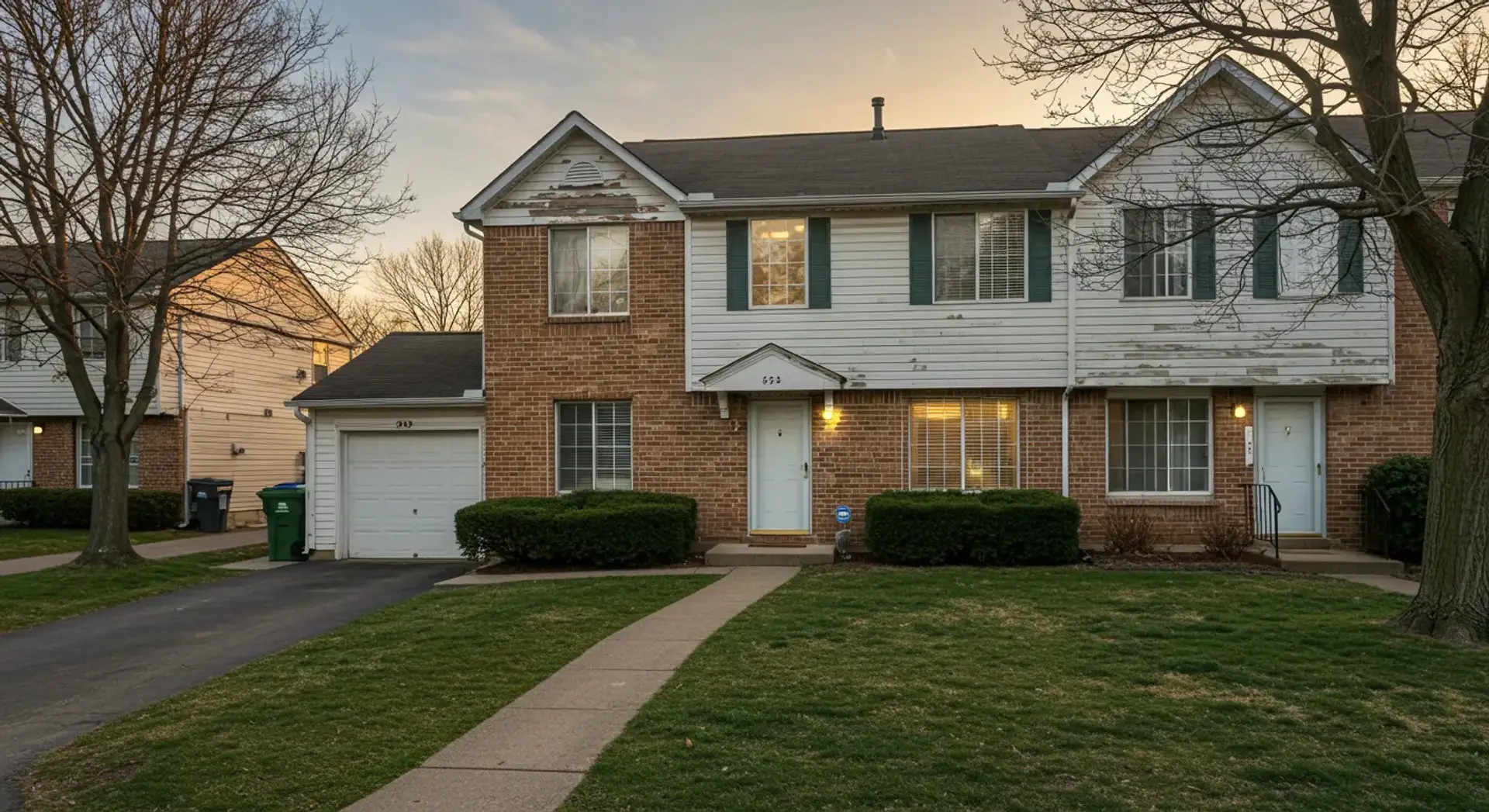
We Buy Houses in Tinley Park, Illinois
Most of Tinley Park is newer than people think — median build year 1987. Those homes are hitting their first big replacement cycle now.
- As-Is — Any Condition
- No Fees or Commissions
- Close On Your Timeline
The local buyer for Tinley Park homes
You can sell a Tinley Park house as-is for cash, skip the repairs entirely, and choose the closing date yourself. The most useful thing to know before you price anything here is that Tinley Park is a considerably newer village than its historic downtown suggests: the median Tinley Park home was built in 1987, and 43% of the village's housing went up in the 1990s and 2000s alone. (Build-era and housing figures: U.S. Census Bureau, American Community Survey 2019–2023 five-year estimates, tables B25034, B25035 and B25003.)
Tinley Park started as Bremen, a German farming settlement, and renamed itself in 1890 for Samuel Tinley Sr., the community's first railroad station agent. At a meeting in the train depot on 27 June 1892, residents voted 34 to 24 to incorporate as the Village of Tinley Park. Those original 1892 boundaries are now the historic district around Oak Park Avenue, where the late-1800s and early-1900s frame houses still stand — and where the 1892 Metra depot at 6700 South Street was named by the American Institute of Architects in 2007 as one of the 150 Great Places in Illinois.
That historic core is genuinely small. Only 1.7% of Tinley Park's housing predates 1940, and just 8% dates from the 1960s. The village's real bulk arrived in three later waves: 20% in the 1970s, 18% in the 1980s, and then the big one — 22% in the 1990s and 21% in the 2000s, filling subdivisions like Brookside Glen, Avondale Meadows and Timbers Pointe on the south and west sides, many of them built out from the late 1990s into the early 2010s. (Build-era and housing figures: U.S. Census Bureau, American Community Survey 2019–2023 five-year estimates, tables B25034, B25035 and B25003.)
Each wave fails on its own schedule, and right now they are converging. The 1970s splits and bi-levels around Brementowne and Cherry Creek are on their second or third roof with original sewer laterals underneath. The 1990s and 2000s subdivision homes are hitting their first full replacement cycle at once — roof, furnace, air conditioning, water heater and window seals inside a few years of each other — and homes from the late 1970s into the mid-1990s can carry polybutylene supply piping, which insurers and lenders treat as a live risk.
We buy across all of it, exactly as it stands. Tinley Park also straddles the Cook–Will county line, which changes the tax bill and the recording process but never changes whether we will buy.
Why Tinley Park homeowners sell as-is
Every situation is different. Whatever you’re facing, we can help you sell without repairs, fees, or the wait of a traditional listing.
- 1990s–2000s subdivision homes with roof, furnace, A/C and windows all due at once
- Polybutylene supply piping in homes built from the late 1970s into the mid-1990s
- 1970s splits and bi-levels on original sewer laterals and aging panels
- Aluminum branch wiring in some mid-1970s builds
- Downtown frame houses with balloon framing, rubble foundations and porch rot
- Townhomes and condos facing special assessments from an aging association
- Inherited homes and estates where nobody wants to manage a renovation
Tinley Park is a 1990s village with a Victorian downtown
Sellers here routinely misjudge which Tinley Park they own, and it changes the whole conversation. The Oak Park Avenue historic district is real but tiny — under 2% of village housing predates 1940. The median Tinley Park home was built in 1987, and the largest single block is the 43% built across the 1990s and 2000s. That matters at sale because the two halves fail completely differently: a downtown frame house needs masonry, framing and porch work an old-house specialist prices, while a Brookside Glen or Timbers Pointe home needs four or five major systems replaced inside the same few years. An offer that treats them the same is guessing at one of them. We look at the house before we commit to a number, and we do not renegotiate it afterwards. (Census, 2019–2023.)
Situations we buy Tinley Park homes in
Behind on payments or facing a sale date? We can often close before it.
Inherited a Tinley Park home? We buy as-is, contents and all, on either side of the county line.
Owe back taxes? They're typically paid off at closing from the proceeds.
A fast, neutral sale with a firm closing date so both parties can move on.
Sell your rental occupied or vacant — no evictions, no turnover, no repairs.
Stop paying to hold an empty house. We buy vacant homes in any condition.
A Tinley Park subdivision home with four systems due at once is our most common purchase here.
Moving out of the area? Close on a firm date that matches your timeline.
Don’t see your situation?
These are just the most common ones. We buy Tinley Park houses for any reason and in any condition — including fire, water, foundation, and mold damage, houses still full of belongings, and property types beyond single-family houses.
Selling a house in Tinley Park — FAQs
My Tinley Park house is on the Will County side. Any difference?
None to us. Tinley Park straddles the Cook–Will county line, which changes which county bills your property taxes and where the deed records, but not whether we buy or how we price. We close in both counties routinely and the title company handles the recording side.
My Tinley Park house might have polybutylene plumbing. Does that stop a sale?
It stops plenty of financed sales and it does not stop ours. Polybutylene supply piping is common in homes built from the late 1970s into the mid-1990s, which covers a wide band of Tinley Park, and it can fail inside a wall without warning. Insurers and lenders both treat it as a live risk. We buy the house with the piping in place.
What about the 1970s splits and bi-levels?
We buy those throughout Brementowne, Cherry Creek and the rest of the 1970s stock, which is about a fifth of the village. Original kitchens and baths, aging panels, first-generation central air and clay sewer laterals are all normal at that age. Some mid-1970s builds also carry aluminum branch wiring, which worries insurers and does not worry us.
Do you buy Tinley Park townhomes and condos?
Yes. Tinley Park has substantial attached-housing inventory from the 1990s onward, and we buy units alongside single-family homes. A pending special assessment or an association reserve shortfall is one of the more common reasons an attached-home sale falls through at retail — tell us and we factor it into the offer rather than walking away from it.
Do you buy 1990s and 2000s Tinley Park subdivision homes?
Yes, and they are the largest share of what we buy here — 43% of Tinley Park's housing was built across those two decades. Those homes are now reaching their first full replacement cycle, with roof, furnace, air conditioning, water heater and window seals all coming due within a few years of each other. That bill is exactly why owners call us instead of renovating first. (Census, 2019–2023.)
Do you buy older homes in Tinley Park's historic downtown?
Yes. The late-1800s and early-1900s frame houses inside the village's original 1892 boundaries around Oak Park Avenue are exactly the sort of property we buy as-is — knob-and-tube remnants, rubble foundations, balloon framing and porch repairs included. They are a small share of the village, under 2% of housing, and they need a different kind of buyer than the subdivisions do. (Census, 2019–2023.)
How we arrive at an offer on your Tinley Park home
You should be skeptical of anyone offering to buy a house they have not seen. Most owners get the postcards — no company name on them, a mobile number, a promise of top dollar. So here is how ours works: we use the same formula on every house, and when we present the offer we show you the math behind the number and the recent Tinley Park sales we compared yours to. Nothing is invented on the spot, and nothing is held back.
A buyer who will not show you where their number came from is telling you something. You are welcome to check ours against what you already know about your own street — and you are never under any obligation to accept it.
And the honest part: if your Tinley Park home has been kept up and you can wait out 60 to 90 days of showings, an inspection and a buyer's appraisal, listing it with a good local agent will usually net you more than we will — even after commission. We would rather tell you that than take an hour of your time. A cash sale earns its place when the house needs work you do not want to fund, when something about it puts lenders off, or when a closing date that will not move is worth more to you than the last few percent.
-
Buying since 2021
A local Chicagoland company, not a national brand or a call center.
-
100+ properties closed
$5,334,500 paid out for houses across the six counties we serve.
-
Our own funds, our own name
We are the buyer on the closing documents, through a local title company.
Get your free cash offer on your Tinley Park home
Tell us about the property and your situation. We’ll reach out with a fair, as-is cash offer — no pressure, no cost, and no obligation.